




SOTAGOLD LLC.
SOTAGOLD LLC.
SOTAGOLD LLC.
SOTAGOLD LLC.
TREATMENT OF WORN OUT GOLD CONTAINING ACTIVATED CARBON (FINE CARBON)
-
Losses OF GOLD
During the elution of gold from activated carbont the losses of gold make up to 0,5 - 1,0% -
OUR PLAN
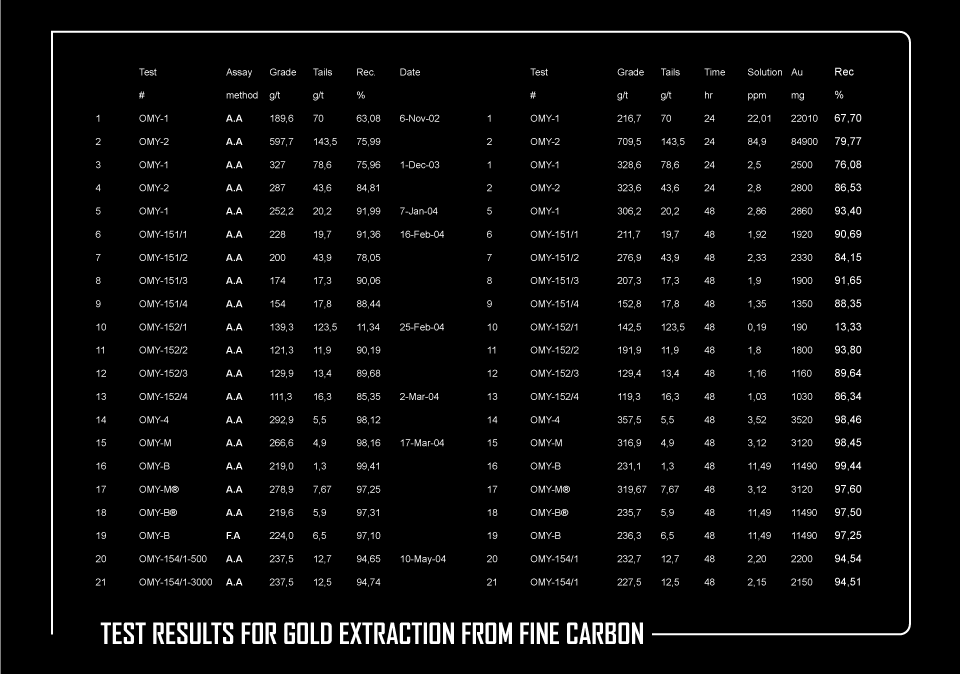
We developed a technical solution which allows extraction of gold for more than 94% from fine carbon -
ECOLOGY
CO2 ( carbon dioxide) is diluted with air and does not create an additional gaseousness -
cost
The realization of the process requires no substantial processing costs
About
SOTAGOLD LLC.
The research began in 1999, for the search of technological solutions for standard gold mining factories, at which fine carbon is used during the sorption process of precious metals. In 2012 this new technology was moved to U.S. and became the foundation of Sotagold LLC. Currently the patent is approved in USA.
These technological processes minimize the loss of gold (Au) with a fraction of worn out fine carbon, which contains tiny dispersed carbon components.
It is necessary to solve the following problems: To find a technical solution to detect and accumulate fine carbon; To suggest an effective way of its processing. The processing of fine carbon by usual methods does not allow for the sufficient extraction of gold. The above mentioned feature is related to structural, granular metric ( d≤ 60 mcm) and chemical features of fine carbon. Under high temperatures the minerals of barren rock (from 30-70%) in fine carbon cover gold clusters with glassy film, which makes the interaction with cyanide difficult. Furthermore, there are graphite like structures that are resistant to the oxidation at the carbon stage. Considering the above-mentioned specifics of fine carbon, we have worked out an effective way of processing, which combines the process of mechanical activation and low temperature gasification of the carbon component. All this allows extraction of gold for more than 94% from fine carbon. We developed a simple technical solution using standard equipment. The realization of the process requires no substantial processing costs, nor does it have an ecological effect on the environment. The process has been successfully tested in industrial conditions.
-
Test
Process
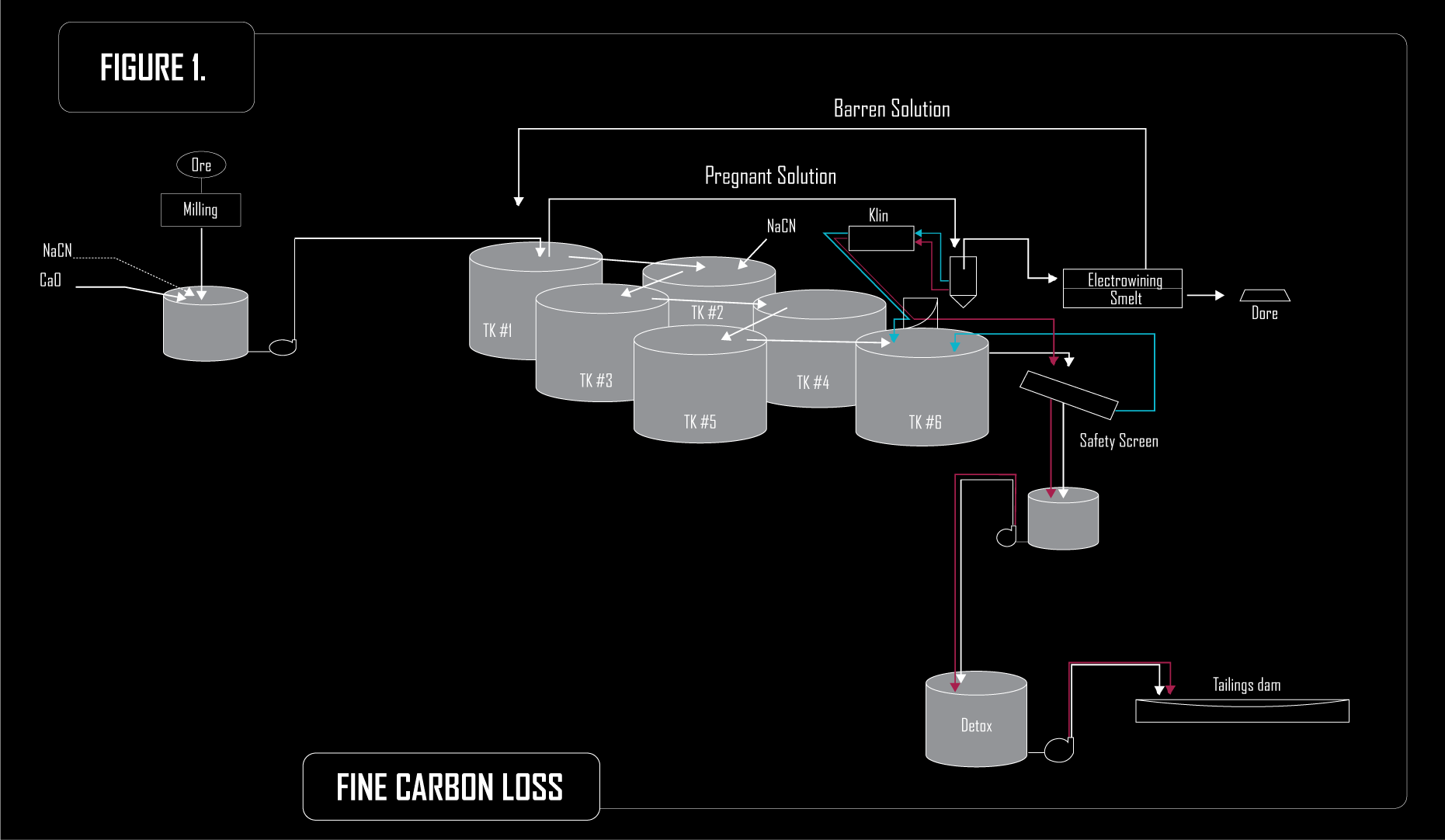
During the elution of gold from activated carbon, the carbon undergoes chemical and mechanical attrition. Amount of the worn-out gold-containing carbon, which can be collected and processed at gold recovery plants, is evaluated at the rate of 20-25 kg per 1 ton of activated carbon treated during the elution. In our estimation, the losses of gold with the worn-out carbon make up from 0,5 to 1,0%, depending on the amount of gold melted at the plant. Most of gold recovery plants dump the Fine Carbon into the tailing dams, in order to eliminate its negative impact on the process of cyanidation of precious metals (see Figure 1).
-
Figure 1
TREATMENT
The enterprise on treatment of gold-containing activated fine carbon should be based on regional principle, i.e. treat the raw material delivered from the plants of the whole region (country, province, several provinces, etc.). The enterprise should be located where fine carbon can be delivered (for example, by railway or motor road).
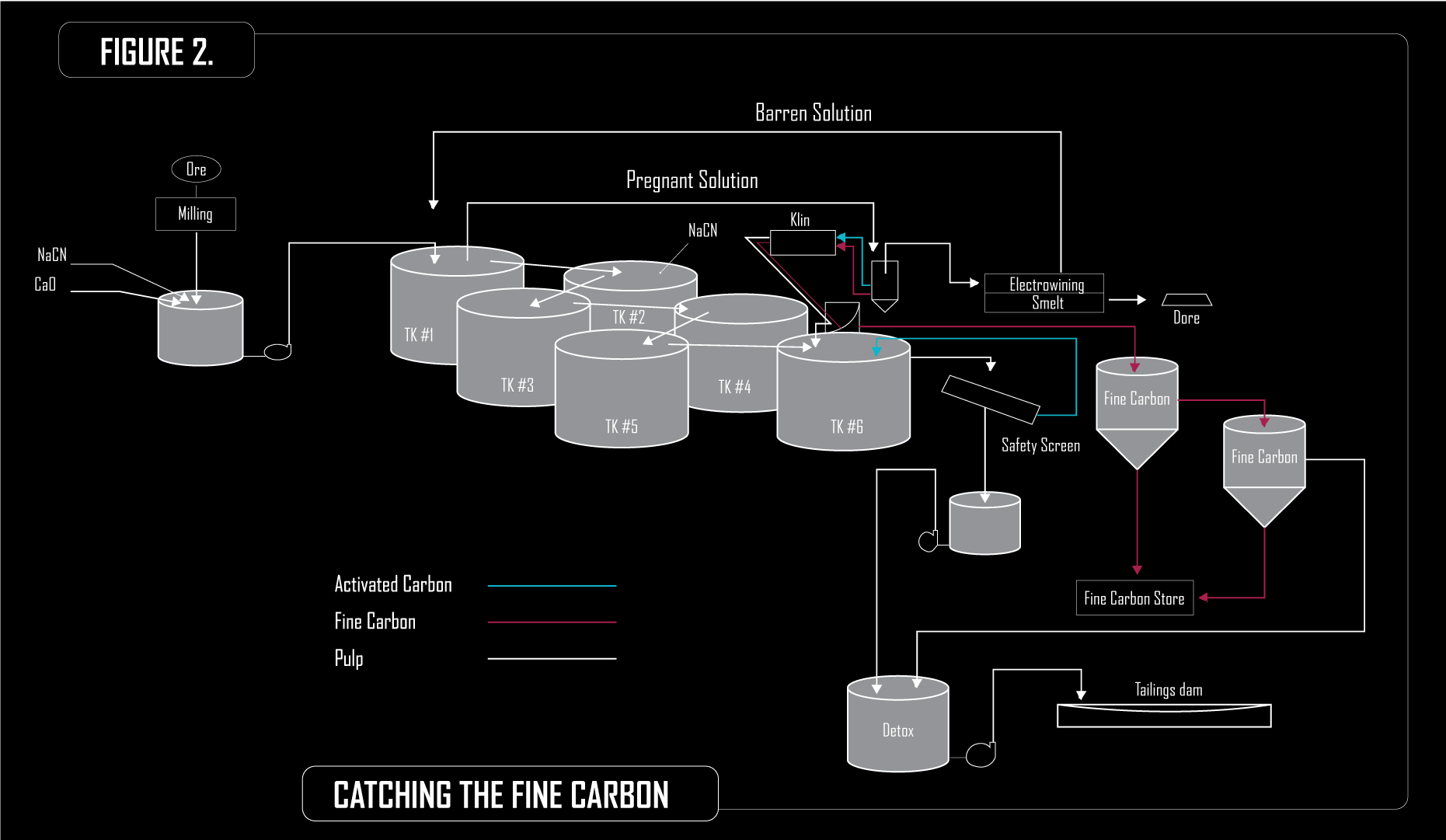
1. There are many methods for catching the fine, worn-out gold-containing activated carbon (Fine Carbon) (see Figure 2).
2. Low cost and effective treatment of Fine Carbon has been developed.
3. The process proposed has been tested in the industrial conditions with gold (Au) recovery achieved more than 93-98%.
4. This process is implemented using standard equipment (mixer, regeneration kiln).
5. The process is implemented using inexpensive catalyst system, in the mode roasting under low temperature.
-
Figure 2
ECOLOGY
The process of thermal catalytic treatment of fine carbon does not introduce additional loads on
environment because it does not produce waste water or liquid waste products, and possible emitted dust returns back by cyclones to the recycle technological system. As for gases, CO2, carbon dioxide is diluted with air and does not create an additional gas contamination. Providing corresponding technological solutions (scrubber), the whole process becomes closed.
QUESTIONS ON ECOLOGY
The process of thermo catalytic processing of worn out carbon waste does not have an additional effect on environment: Liquid waste and sewage are absent, and any possible escaping dust is returned into the circulating system of the process with the help of a cyclone. Gas related issues: CO2 ( carbon dioxide) is diluted with air and does not create an additional gaseousness. With the right technological approach, the process becomes closed. The quantity of the gold containing worn out carbon at gold mining plants is calculated as follows: 25-30 kg on 1 t of processed activated carbon during the process of eluation. In the event when the technological research has being conducted at the plant, the annual quantity of gold is 55TH X 500g/t=28.000g=28kg(900.4 ounce).
All plants drop the worn out gold containing carbon into the tailings for the purpose of excluding its penetration into the process of cyanation. There was no reasonably affordable technology of processing this product until recently. The United States has the strictest laws in the world regarding environmental protection, this is why this project, which includes complete waste detoxication, will be successful. At any gold extraction plant, where the technology of cyanation of gold containing materials and the precipitation of dissolved gold and silver on the activated carbon is used, the waste is formed in the form of tiny fractions of carbon, which is potential raw material for the plant.
Get in toucH
- Contact info
- To send us a message or just to say hello, please complete the form on the right or contact us via details listed bellow. We'll get back to you asap. Unless it's a weekend.
- 13547 Ventura Blvd., #114,
- Sherman Oaks, CA 91423
- Telephone: 818-745-5090
- Fax: 855-801-8399
- Email: info@sotagold.com